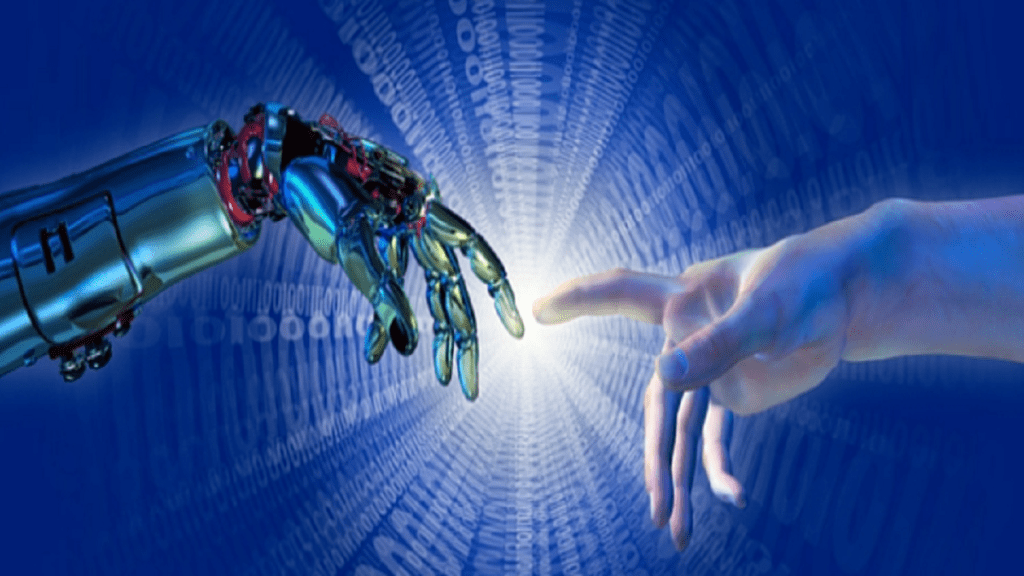
Many new ideas come and go in education. Some stick and others disappear (often debunked). It is always wise to wait for solid research to guide one’s decision with respect to any new initiative, though time is a valuable commodity in education. I think it is fair to say that Artificial Intelligence is here to stay!
Artificial Intelligence (AI) is revolutionising various sectors, and education is no different. AI can analyse various pieces of data, automate tasks and truly personalise the learning experience. It is probably not a big stretch to suggest AI could be the biggest game changer in education for many decades.
Some of the major considerations and implications of AI in education are listed below (these are based solely on my own readings. experience and opinion):
Personalised and Individualised Learning Experiences
Differentiation and adaptive learning are common words used in classrooms worldwide. These strategies aim to ensure every child is catered for and challenged, given the different abilities and learning needs in each classroom. However, it does not ensure every student is truly getting a personalised education; that would be impossible to achieve given the limited time teachers have at their disposable. AI may indeed be the answer to truly achieving an individualised and personalised learning experience. AI algorithms, can analyse the strengths and weaknesses of each student quickly, then create tailor made educational content accordingly.
There are already many adaptive learning platforms that utilise AI in ensuring the user remains appropriately challenged. Through adaptive learning platforms, AI can deliver customised lessons, tests, quizzes, and tasks to students based on their ability level and progress. This personalised and individualised approach not only enhances student engagement but also fosters deeper understanding of the content.
Improved and Enhanced Teaching Practices
In addition to being able to genuinely differentiate and personalise learning for each student, AI can provide valuable insights and support to optimise teaching practices. A quick analysis of the performance data of each student by AI can help identify strengths and weaknesses of each student. Furthermore, it can suggest possible interventions and/or alternative teaching strategies using research based and proven methodologies.
AI will also help with grading work and other administrative tasks, freeing up the teacher to focus more on their classes, delivering high quality lessons and provide individualised support for each child.
Access to Quality Education
A child in a remote part of the world, where there are few schools, if any, minimal number of teachers, and quality education lacking, could now be given a quality education online using AI. Online learning platforms powered by AI can deliver educational content to learners anywhere, anytime, breaking down geographical barriers and socioeconomic constraints.
AI will also allow children access to educational resources in their native language. This will foster inclusivity and hopefully close the inequality gap. By making education more accessible and inclusive, AI has the power to empower individuals and communities worldwide.
Ethics
As with all new ideas and developments, one must consider the ethical considerations and challenges. This is definitely the case with AI in education. There are privacy concerns with the collection and use of student data. Thought needs to be given to algorithmic bias and data collection.
The potential for replacing human teachers with AI technology is a serious point to think about, though not in the near future, it does need addressing. Will teachers be replaced by AI one day?
AI applications in education need to be ethically designed, transparent, and accountable. Robust data privacy policies are a must that promote algorithmic fairness. Policymakers hold a key responsibility here.
In Summary
The impact on education by AI as it evolves will only deepen and increase. AI will offer new opportunities to enhance learning, learning outcomes and empower educators. It will allow access to quality education worldwide by expanding the availability to all learners regardless of geography, age or background. We can harness the transformative potential of AI by embracing it responsibly and ethically.
(As written earlier, this article is solely based on my own readings, experience and opinion. Please leave your comments and thoughts)
Yasir Patel



 YasirPatel