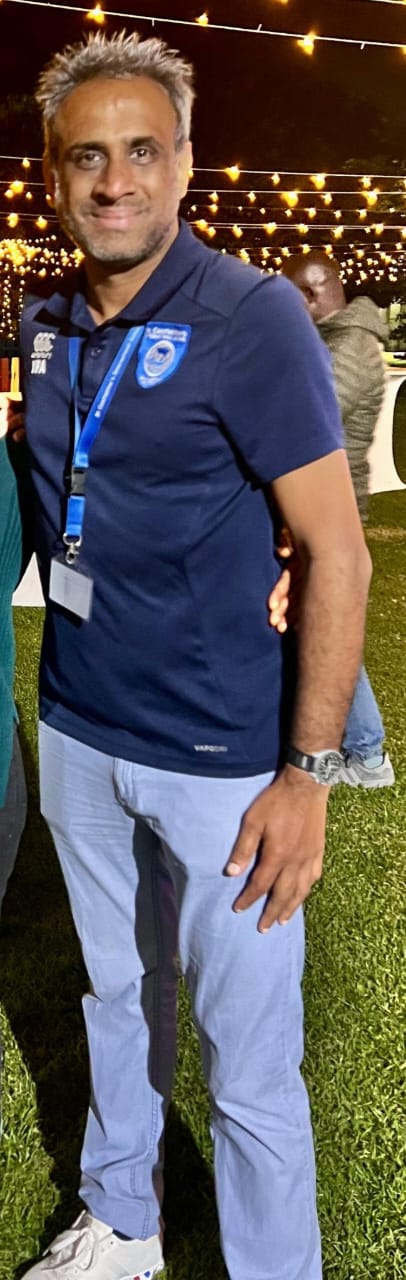
A Decade in Headship

(WarningThis post is unplanned.  As I wrapped up loose ends today, it just happened!  This is the first draft, unedited, and definitely without AI being used)

In 2014, at the age of 32, I was appointed as the Head of School/School Principal at The British School Caracas.  Although I have always enjoyed, and often seek out a challenge (the more challenging, the better!), I must admit, there was a huge sense of Imposter Syndrome when appointed.  This was mostly felt when I was introduced to members of the community as the new Head of School.  I had only been in education for eight years, and I was ‘only’ 32 years old!

I started the role exactly 11 years ago – on Friday 4th July 2014, ironically it started as I landed in Washington D.C. to attend a conference – 4th July being Independence Day in USA, I had to ask, “am I feeling independent?”  I had already taken the decision to work through the summer vacation period.

When I returned to Caracas a few days later, I sat in my new office for my first proper day of work as the new Head of School, and thought, “wow, you’ve made it Yasir!” How wrong I was!  I had a career goal of being a Headteacher at the age of 50 years old and now here I was, looking after a wonderful school with a warm, caring, dedicated, supportive, and dare I say, demanding (and, correctly demanding) parent body.  That first day was overwhelming to say the least – I had meetings with Board members, a few parents, administration staff, and faced a to-do list that felt insurmountable when the day ended.  Throw in the fact that it felt overwhelming without any teaching staff or students (the summer holiday period had started), I found myself wondering that evening how I will cope. I felt being promoted internally would make life easier, but how wrong I was.  “Have I bitten off more than I can chew?” was running through my head.  The next day I woke up early, went to work, locked the office door, asked not to be interrupted, and broke every task into small manageable chunks. I planned it out over the next six weeks, the next few months, and indeed, the next few years.  I felt much better and indeed, “it was fine”.

Following six great and invaluable years as the Head of School in Caracas, I have now completed four years as the Headteacher/School Principal at another beautiful and truly amazing school, St. Constantine’s International School in Arusha, Tanzania.  So, after ten years in Headship, and a few more white hairs, what have I learnt?  If interested, here are some thoughts and reflections one day after finishing my tenth year.

  1. Leadership is about people, not just policies:  Creating policies, systems, structures, processes is relatively easy I feel.  However, ensuring these are adhered to, implemented properly, and ensuring quality management systems are in place to check their effectiveness is the difficult bit, and the part I have needed to work on regularly.  The best systems fail without trust, positive relationships, and without empathy.  When things have worked, it is because there was genuine buy-in and trust from the staff body.  Taking the time to build this trust is worth it in the long run.
  2. Culture, culture, culture:  Organisational culture is key and once again, takes time to build.  Understand your context and be sure of the culture you want at your school.  Thereafter, work diligently daily to ensure this is put into place.  Your vision, mission, key goals and more, will become clear to all, a reality, and are more likely to stick. Ensure everything is always in line with the culture you are creating.
  3. You never stop learning:  At 32, I thought I was ready and prepared.  It did not take long to realise I was not.   After a decade, I realise how much I did not know, and have learnt, often due to being surrounded by talented, highly skilled colleagues.  Leadership is humbling – the best heads will remain curious, open to feedback (even when it hurts, probably more useful when it hurts), and are willing to adapt, but always sticking to, and without compromising on core principles (staff want a clear vision, with a plan towards that vision).  It is fair to say, from Imposter Syndrome at aged 32, I often feel a sense of the Dunning-Kruger effect!  Self-doubt never fully disappears and that is ok.
  4. Change takes a lot of patience and a thick skin:  Change takes years, and there will be many hurdles to overcome.  Remember the long-term goal (your vision), see beyond the trees and the forest, whilst making sure the journey is as smooth as possible, but don’t expect it not to be rough.  Some of my best decisions were unpopular at first, but I had the conviction and belief to know they will be ok in the end.  Choose these moments wisely.
  5. Remember the reason why we do what we do:  The answer?  The students and the school.  This core question – “what is the best solution for our students and school?” often drives me to the right decision easily and pretty quickly.  This is very much emphasised when spending time in classrooms with the young people who we wish to empower and develop into great human beings.
  6. The job changes you:  This job has definitely changed me, changed my identity, and some values, all for the better.  I have grown stronger, tougher, and more resilient, whilst softer in other ways.  
  7. It’s the position, not the person:  With great power comes great responsibility, and remember you are a temporary placeholder of the position you are in.  Take it seriously, remember the impact your decisions have on everybody, on the young people under your care, and always try your best. When choosing a new initiative, try the R-V-P method (What is your Rationale? What is your Vision? and What is the Process to get you there?) – I have found this has worked extremely well when new ideas have proven successful (thank you Howard Marshall!)
  8. There is no shortcut to hard work:  This job is relentless and never stops.  I have worked many long nights, weekends, and carried work home.  I have missed family events, often to great regret.  Over time, I have learned that “balance” may be unrealistic to achieve, but, through hard work it is possible to guard one’s personal time and have a decent work-life balance (by the way, make sure to exercise and stay healthy!).
  9. Remember your team:  You are just one cog in the machine.  You are not the smartest person in the room nor do you need to be.  Leadership is about fostering the conditions for others to shine, invest in others’ growth, and surround yourself with a highly talented staff body that will question you when necessary, but who in the end, are willing to say, “Let’s agree to disagree, disagree and commit.” 
  10. “It’s gonna be fine”:  A personal favourite of mine.  No matter what, it will be ok and things will be fine in the end – “it’s gonna be fine”.  

Last word, I reread my Top Twelve Tips post written in 2016 and to my pleasant surprise, all of them still apply and some have been touched upon above.

I hope this helps somebody out there.  I would love to hear from others – please comment below. 

Time to sign out (somewhat!) for the holiday period.

Yasir Patel

Profit over Pedagogy

Education is the cornerstone of economic and societal progress, including personal development.  However it has increasingly fallen victim to the clutches of commercialisation.  What is a noble pursuit aimed at enlightenment and empowerment, has transformed into a lucrative industry, driven often by profit margins, rather than by genuine pedagogical principles.  The moneymaking sham in education can be seen at every level, from nursery to university, and beyond.  It is reshaping the landscape of learning in ways that prioritises financial gain over educational integrity.

One of the most glaring example of this is the proliferation of for-profit educational institutions, companies and groups, often owned by cut-throat financial organisations. These establishments highlight the importance of a “student first” approach, market themselves as beacons of learning, but often prioritise shareholder returns over student success.  This is not a reflection on all such groups of course. The commodification of education has led to many unnerving changes and practices all with a relentless pursuit of student admission numbers, all aimed at maximising income.

Moreover, the rise of online education platforms, exploded during and post-COVID, has further exacerbated the monetisation of learning.  While online education has the potential to democratise access to knowledge and many do it extremely well, it has also become a breeding ground for dubious schemes and exploitative practices. From crazy course fees to misleading marketing tactics promising instant success, these platforms often prioritise sales over the quality of education delivered.  Then again, why wouldn’t they? It’s a business!  Tread carefully.

Textbooks are a particular source of agony for many schools, students, and families.  Textbook prices have increased in recent years, far outpacing the rate of inflation, and placing a heavy financial burden on students and schools.  Publishers frequently release new editions with minor revisions, rendering older versions obsolete and forcing students to purchase costly updates.  Furthermore, the commercialisation of education has seeped into the realm of academic research.  In an era where publications are currency, predatory journals and conferences prey on unsuspecting scholars, charging exorbitant fees for publication without providing adequate peer review or editorial oversight.  

Addressing the moneymaking sham in education requires a multifaceted approach.  Of course, businesses are well within their rights to sell products and make money.  It is up to the user and buyer to determine whether the product is sound.  Does it really work?  Is it a fad?  Do your research, ask for evidence and be sure.  

Charles Goodhart stated that, “When a measure becomes a target, it ceases to be a good measure”(Goodhart’s Law).  I would argue Education has become a target in many aspects and as such, there is a clear opportunity for individuals to cash in and who are we to stop them, or criticise.  That is the beast that has been created!

Thus, ultimately, the moneymaking sham in education is a symptom of deeper societal ailments, the commodification of knowledge, the prioritisation of financial gain, and the erosion of public trust.    

The idealists would love education to remain a beacon of enlightenment and empowerment for generations to come, however, maybe that possibility no longer exists?

Yasir Patel

Pseudoscience in Education

Pseudoscience: Can be defined as a collection of beliefs or practices mistakenly regarded as being based on scientific method. (Wikipedia)

All children get one chance at school, and it is our duty, our responsibility, to ensure we do our best for them.  Every minute counts and every second matters.  As such, any initiatives we roll out or teaching strategy we utilise should be based on sound scientific foundations.   We should rely on evidence-based practices to enhance learning and  student development. 

However, within the profession, there are many practices that quite frankly fall under pseudoscience.  These actions, initiatives and practices do not help a child’s learning.  Pseudoscience in education can take various forms, from teaching methods that are questionable, to unfounded theories on learning styles. These pose a significant challenge to the integrity and efficacy of educational systems worldwide.  Often these are unintentional and well intended.  

A common pseudoscientific belief in education (and one of the most widespread) is the concept of learning styles (each person has a particular learning style that makes them learn best).  Supporters of this theory suggest and propose that individuals have distinct preferences for how they receive and process information, such as auditory, visual, or kinaesthetic learning styles.  Despite widespread acceptance over the years among educators, the notion of tailoring instruction to match individual learning styles lacks scientific and empirical evidence. This theory has long been debunked.

Numerous studies have debunked the learning styles myth, revealing that learners do not benefit more from instruction tailored to their so called preferred style. In fact, evidence suggests that adapting teaching methods to suit specific learning styles may even impede learning by limiting exposure to diverse modes of information processing.

Other areas that have not been proven, or completely debunked include Brain Gym, Neuro-lingustic programming, brain-based learning, left and right brain dominance, lavishing praise, multiple intelligences by Howard Gardner, Gender stereotyping and many more!

We live in an era marked by technological innovation, educational products for every subject can now be found easily. These often promise the world to students and promise to unlock their full potential.  How could one turn such productive products away??  It is fair to say that many of these products lack evidence and rely on pseudoscientific claims as well as anecdotal evidence.  They prey on the anxieties of parents and students desperate to gain the best marks  possible.  There exists a deep lack of rigorous research and oversight in the development and marketing of such products.

So, how can educational leaders and educators navigate this path that is often swarming with pseudoscience? 

We need a concerted effort towards promoting evidence-based, science-backed practices. John Hattie’s Visible Learning is a great go-to resource.  We need to prioritise critical thinking and scientific literacy, equipping educators with the tools to separate fact from fiction within the educational arena.

As leaders, we should push back when necessary, especially when presented with a new idea that is not totally founded on sound scientific principles.  It can be easy to give the approval as waiting for research may take time, many years in fact.  However, the opportunity cost may be detrimental to a student’s education, who only receive one opportunity at school.  

Let’s foster a culture of inquiry and empirical scrutiny within our schools.  This can serve as a defence against pseudoscience.  By embracing the principles of skepticism and rigorous inquiry, we can uphold the integrity of the educational profession and protect the interests of our learners.

Yasir Patel

5 Qualities of a Good Leader: Interview with Vawsum Schools

I recently did an interview with Aditya Maheswari, the co-founder and CEO of Vawsum Schools PVT Ltd as part of their Edutalk series.

Some links of the interview are below:

📑 Blog Link – https://vawsum.com/qualities-of-a-good-leader-vawsum-edutalk-yasir-patel/

🎙️ Podcast Link – https://anchor.fm/vawsum-edutalk/episodes/5-Qualities-of-a-Good-Leader—Mr–Yasir-Patel-e1et55f

📹 Full Interview Link – https://youtu.be/NIEkiMYSK94

Philosophy of Education

Somebody asked me recently for my Philosophy of Education (with a one page limit!). It really made me think deep and I am glad I was asked. My response is below. What is your Philosophy of Education?

All children can learn and be successful, and they all deserve the best education.

My educational philosophy stems from the above statement; a simple yet powerful statement.  Students are first, second and third in all my decision-making processes.  This should be for all aspects of schooling.  It includes timetabling, recruitment of staff, infrastructure considerations, retention of staff, legal questions, financial discussions and much more.  A question often used by myself, and one I encourage all stakeholders in the school to use is, “What is best for the students?  The answer to this nearly always guides one in the right direction.  I keep this question at the forefront of all decisions that need to be taken on a daily basis.

The students are the most important members of a school community.  Under the correct conditions and with the appropriate strategies, all students can and will learn.  Every student must make significant progress in every lesson.  This goal and my personal definition of High Quality Learning should be of utmost importance and the top priority in all classrooms every day.  I believe the classroom is a living community and that everyone, from the principal to the students to the parents, must contribute in order to maintain a positive atmosphere.  I will not shirk from my responsibility as a leader to promote and enforce this aim.  Promotion of this involves developing and training the teaching body in ensuring the success criteria that make a great lesson are agreed upon, transparent and understood. Enforcement of this includes a clear appraisal system that takes into account all the aspects of a teacher’s job, and not solely one or two lesson observations, leadership is sufficiently trained to assess performance and follow-up is always done.  The ultimate goal towards teachers, as with students, is to encourage intrinsic motivation toweards their own personal development.

Children need constant support and guidance and their welfare should be a key focus at all times.  Happy and safe students are students who learn more effectively.   All children should be valued, respected, nurtured, encouraged, praised and supported. Children must learn and develop both academically and socially, and we must work hard to prepare them for adulthood.  This means creating well-rounded individuals who are not simply excellent at subjects such as Mathematics or Art or History, but who can hold a conversation, debate, empathise, care for others and all with humility, respect and modesty.  The world needs kindness more now than ever before.  It is our duty as educators to create these kind young adults.

As for the teachers who I am fortunate to work alongside with; I want to work with teachers who are academically well-qualified, who enjoy working with children, who are prepared to work really hard for those children, who have genuine humility, who are open to improving their practice for the entire length of their teaching career, who are idealists, who acknowledge the fallibility of the human condition, who always see the funny side of things, and teachers who teach for the love, not solely for the money.  In return I want to provide teachers with the very best opportunities for continuous professional development and learning, give them as much professional autonomy as I can over how they manage their working lives, treat them with respect, honesty and kindness, show them unqualified humanity, the highest level of integrity, acknowledge that they have a life to live outside of school, give them free tea and coffee on demand, and, even if they do it for the love, to pay teachers well.