Pseudoscience in Education

Pseudoscience: Can be defined as a collection of beliefs or practices mistakenly regarded as being based on scientific method. (Wikipedia)

All children get one chance at school, and it is our duty, our responsibility, to ensure we do our best for them.  Every minute counts and every second matters.  As such, any initiatives we roll out or teaching strategy we utilise should be based on sound scientific foundations.   We should rely on evidence-based practices to enhance learning and  student development. 

However, within the profession, there are many practices that quite frankly fall under pseudoscience.  These actions, initiatives and practices do not help a child’s learning.  Pseudoscience in education can take various forms, from teaching methods that are questionable, to unfounded theories on learning styles. These pose a significant challenge to the integrity and efficacy of educational systems worldwide.  Often these are unintentional and well intended.  

A common pseudoscientific belief in education (and one of the most widespread) is the concept of learning styles (each person has a particular learning style that makes them learn best).  Supporters of this theory suggest and propose that individuals have distinct preferences for how they receive and process information, such as auditory, visual, or kinaesthetic learning styles.  Despite widespread acceptance over the years among educators, the notion of tailoring instruction to match individual learning styles lacks scientific and empirical evidence. This theory has long been debunked.

Numerous studies have debunked the learning styles myth, revealing that learners do not benefit more from instruction tailored to their so called preferred style. In fact, evidence suggests that adapting teaching methods to suit specific learning styles may even impede learning by limiting exposure to diverse modes of information processing.

Other areas that have not been proven, or completely debunked include Brain Gym, Neuro-lingustic programming, brain-based learning, left and right brain dominance, lavishing praise, multiple intelligences by Howard Gardner, Gender stereotyping and many more!

We live in an era marked by technological innovation, educational products for every subject can now be found easily. These often promise the world to students and promise to unlock their full potential.  How could one turn such productive products away??  It is fair to say that many of these products lack evidence and rely on pseudoscientific claims as well as anecdotal evidence.  They prey on the anxieties of parents and students desperate to gain the best marks  possible.  There exists a deep lack of rigorous research and oversight in the development and marketing of such products.

So, how can educational leaders and educators navigate this path that is often swarming with pseudoscience? 

We need a concerted effort towards promoting evidence-based, science-backed practices. John Hattie’s Visible Learning is a great go-to resource.  We need to prioritise critical thinking and scientific literacy, equipping educators with the tools to separate fact from fiction within the educational arena.

As leaders, we should push back when necessary, especially when presented with a new idea that is not totally founded on sound scientific principles.  It can be easy to give the approval as waiting for research may take time, many years in fact.  However, the opportunity cost may be detrimental to a student’s education, who only receive one opportunity at school.  

Let’s foster a culture of inquiry and empirical scrutiny within our schools.  This can serve as a defence against pseudoscience.  By embracing the principles of skepticism and rigorous inquiry, we can uphold the integrity of the educational profession and protect the interests of our learners.

Yasir Patel
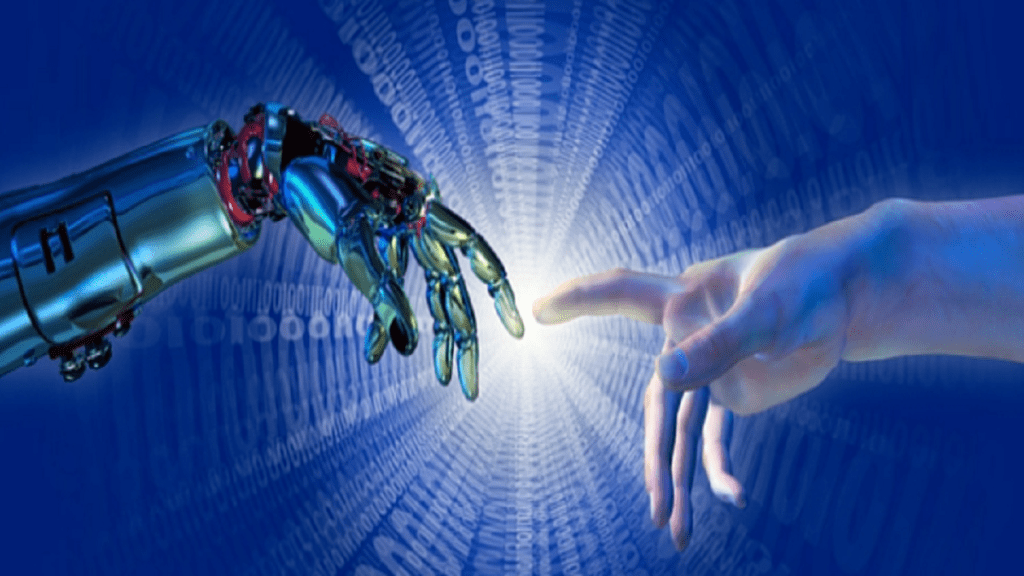
AI: Implications for Education

Many new ideas come and go in education.  Some stick and others disappear (often debunked).  It is always wise to wait for solid research to guide one’s decision with respect to any new initiative, though time is a valuable commodity in education.  I think it is fair to say that Artificial Intelligence is here to stay!

Artificial Intelligence (AI) is revolutionising various sectors, and education is no different. AI can analyse various pieces of data, automate tasks and truly personalise the learning experience.  It is probably not a big stretch to suggest AI could be the biggest game changer in education for many decades.

Some of the major considerations and implications of AI in education are listed below (these are based solely on my own readings. experience and opinion):

Personalised and Individualised Learning Experiences

Differentiation and adaptive learning are common words used in classrooms worldwide.  These strategies aim to ensure every child is catered for and challenged, given the different abilities and learning needs in each classroom.  However, it does not ensure every student is truly getting a personalised education;  that would be impossible to achieve given the limited time teachers have at their disposable.  AI may indeed be the answer to truly achieving an individualised and personalised learning experience. AI algorithms, can analyse the strengths and weaknesses of each student quickly, then create tailor made educational content accordingly.

There are already many adaptive learning platforms that utilise AI in ensuring the user remains appropriately challenged.  Through adaptive learning platforms, AI can deliver customised lessons, tests, quizzes, and tasks to students based on their ability level and progress.  This personalised and individualised approach not only enhances student engagement but also fosters deeper understanding of the content.

Improved and Enhanced Teaching Practices

In addition to being able to genuinely differentiate and personalise learning for each student, AI can provide valuable insights and support to optimise teaching practices.  A quick analysis of the performance data of each student by AI can help identify strengths and weaknesses of each student.  Furthermore, it can suggest possible interventions and/or alternative teaching strategies using research based and proven methodologies.

AI will also help with grading work and other administrative tasks, freeing up the teacher to focus more on their classes, delivering high quality lessons and provide individualised support for each child.

Access to Quality Education

A child in a remote part of the world, where there are few schools, if any, minimal number of teachers, and quality education lacking, could now be given a quality education online using AI.  Online learning platforms powered by AI can deliver educational content to learners anywhere, anytime, breaking down geographical barriers and socioeconomic constraints.

AI will also allow children access to educational resources in their native language.  This will foster inclusivity and hopefully close the inequality gap.  By making education more accessible and inclusive, AI has the power to empower individuals and communities worldwide.

Ethics

As with all new ideas and developments, one must consider the ethical considerations and challenges.  This is definitely the case with AI in education.  There are privacy concerns with the collection and use of student data.  Thought needs to be given to algorithmic bias and data collection.

The potential for replacing human teachers with AI technology is a serious point to think about, though not in the near future, it does need addressing. Will teachers be replaced by AI one day?

AI applications in education need to be ethically designed, transparent, and accountable. Robust data privacy policies are a must that promote algorithmic fairness.  Policymakers hold a key responsibility here.

In Summary

The impact on education by AI as it evolves will only deepen and increase.  AI will offer new opportunities to enhance learning, learning outcomes and empower educators.  It will allow access to quality education worldwide by expanding the availability to all learners regardless of geography, age or background.  We can harness the transformative potential of AI by embracing it responsibly and ethically.

(As written earlier, this article is solely based on my own readings, experience and opinion. Please leave your comments and thoughts)

Yasir Patel